
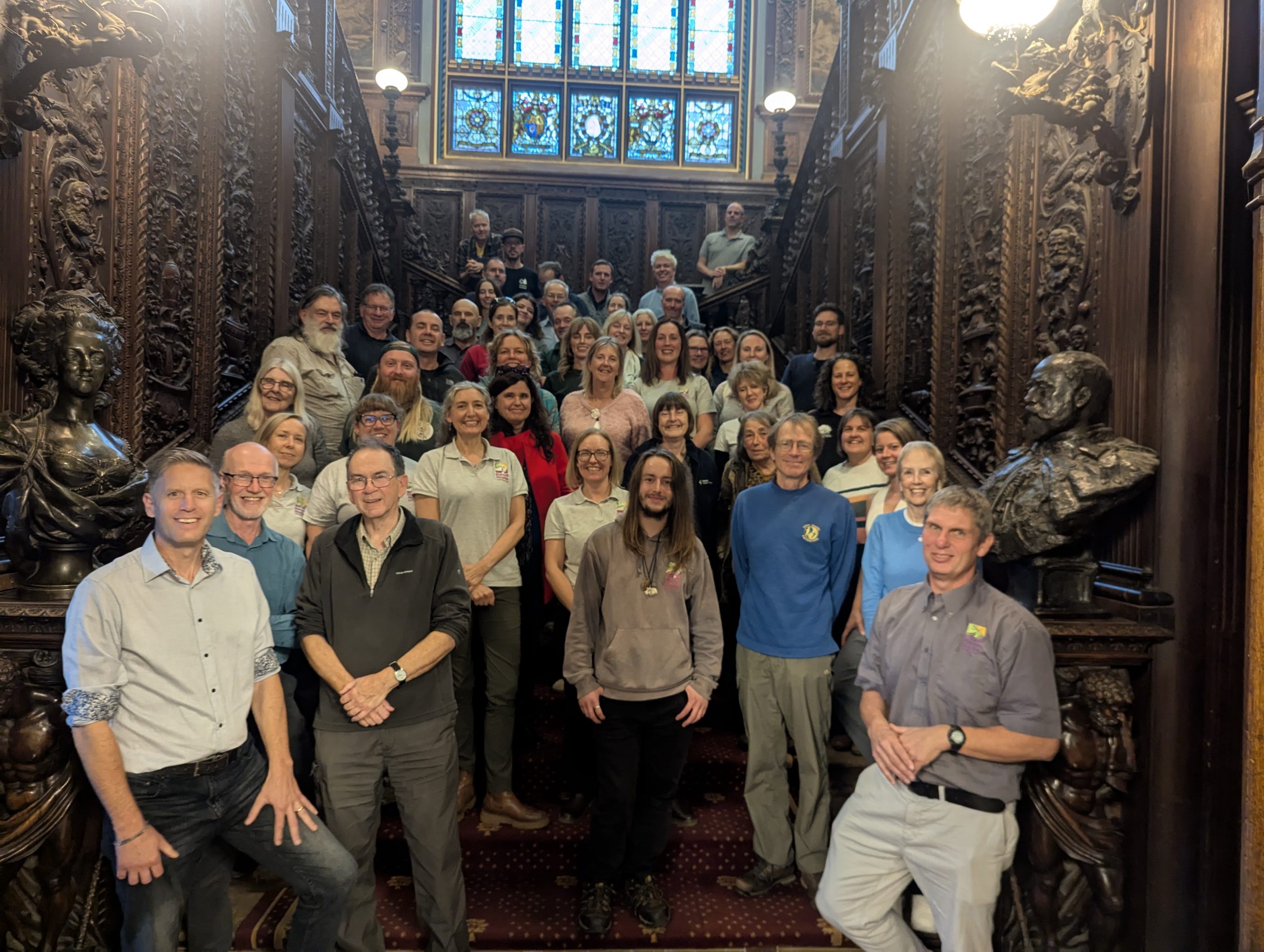
Image: Partners and staff present and past celebrate the 25th Anniversary of the Dorset Heaths Partnership at Canford School
Press Release
Dorset Heaths Partnership Celebrates 25 Years of Heathland Conservation
Representatives from conservation organisations, local authorities and partner agencies came together at Canford School on 28th October to celebrate 25 years of partnership working to protect Dorset’s internationally important heathlands.
The anniversary event marked a significant milestone for the Dorset Heaths Partnership, formerly the Urban Heaths Partnership, which has been at the forefront of heathland conservation since 2001. Established in response to growing pressures from housing development, recreation pressures and wildfire, the Partnership has brought together local authorities, conservation organisations, emergency services and other agencies to safeguard Dorset’s unique heathland landscapes while supporting responsible public access.
Guests, including current and former staff and partners, reflected on a quarter century of achievements. The event began with a guided walk around Stourview Greenspace, followed by presentations and workshops exploring the Partnership’s past, present and future aspirations. The celebrations concluded with refreshments and a commemorative anniversary cake.
Originally supported by £1.2 million of EU LIFE-Nature funding, the Partnership has evolved into a strategic organisation supporting Dorset Heathland across BCP and Dorset Council areas. To better reflect its wider geographical reach and role the partnership was rebranded in 2024 as the Dorset Heaths Partnership.
Over the past 25 years, the Partnership has played a key role in helping the Local Planning Authorities meet the habitat regulations for planning helping balance housing growth with the protection of Dorset’s internationally designated heathlands. It has led a wide range of initiatives, including visitor engagement and wardening programmes, the nationally recognised Dorset Dogs project, wildfire prevention campaigns such as Firewise UK, community heritage projects and the development of Suitable Alternative Natural Greenspaces (SANGs).
Looking ahead, partners recognised the continuing importance of collaboration in addressing future challenges facing Dorset’s heathlands. By working together, they remain committed to ensuring these valuable landscapes continue to thrive for wildlife and people for generations to come.
The Dorset Heaths Partnership would like to thank everyone who has contributed to its success over the past 25 years and looks forward to building on this legacy in the years ahead.
ENDS
Notes for editors
The Dorset Heaths Partnership was formed in 2001 as The Urban Heaths Partnership. Its ten partner organisations are:
• Amphibian and Reptile Conservation Trust
• Bournemouth Christchurch & Poole Council
• Dorset Council
• Dorset & Wiltshire Fire and Rescue Service
• Dorset Police
• Dorset Wildlife Trust
• Natural England
• National Trust
• Forestry England
• Royal Society for the Protection of Birds
Its aim is to alleviate urban pressures on the Dorset heaths brought about by new residential development in the area.
This is achieved by co-ordinated Strategic Access Management and Monitoring (SAMM) delivery, this includes an education programme, heathland species and visitor monitoring, and our Dorset Dogs and Firewise projects. More information can be found Press & Media – Dorset Heaths Partnership
Lowland heathland is an important and rare habitat, and over 75% has been lost in the last 200 years. The remaining areas support an incredibly wide variety of species. This includes reptiles, migratory birds, scarce plants and over 5,000 species of insect, including the rare Ladybird Spider and the iconic Silver-studded Blue Butterfly.
Heathland supports the majority of the UK populations of Nightjars, Dartford Warblers and Woodlarks. These birds nest either on the ground or in low growing vegetation and are vulnerable to disturbance.
Heathlands are the most important habitat in the UK for reptiles, supporting all six species.