
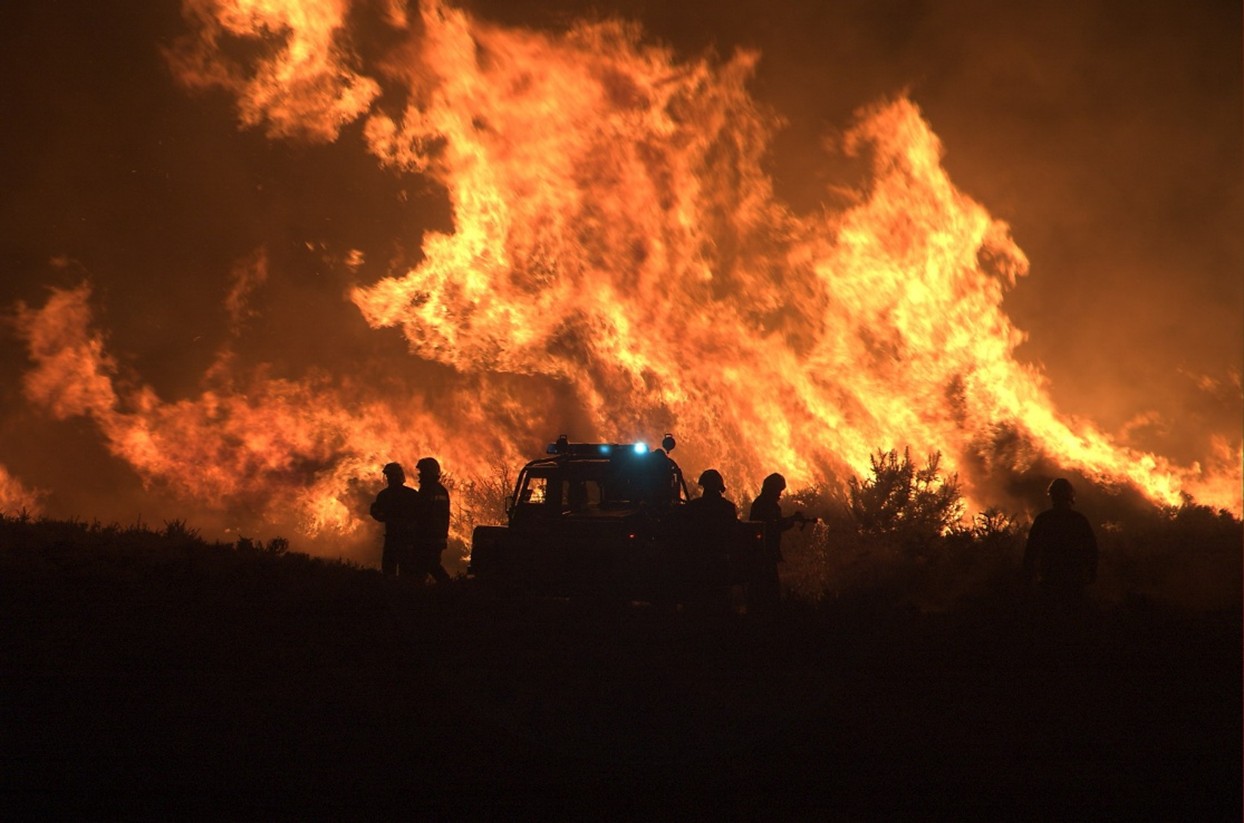
A series of significant heathland fires broke out across the Sandford and Wareham areas of Dorset on the weekend of 28th/29th March, prompting a major response from Dorset & Wiltshire Fire and Rescue Service (DWFRS). More than 60 firefighters were deployed to tackle multiple blazes at Sandford Heath, Great Ovens Hill and nearby areas. Firefighters worked through challenging terrain and limited water access, with the largest fire covering an area of approximately 300 by 200 metres.
Dorset Police have confirmed that the fires are being treated as suspicious, with investigations ongoing and are appealing for witnesses or anyone with information about the fires to come forward.
Heathland fires are devastating, particularly for rare reptiles that inhabit Dorset’s heathlands. The affected areas form part of important conservation sites managed for sand lizards, smooth snakes, and other species that are protected and depend on heathland for survival.
With the fires striking just as reptiles are emerging from hibernation, the timing has amplified the ecological impact.
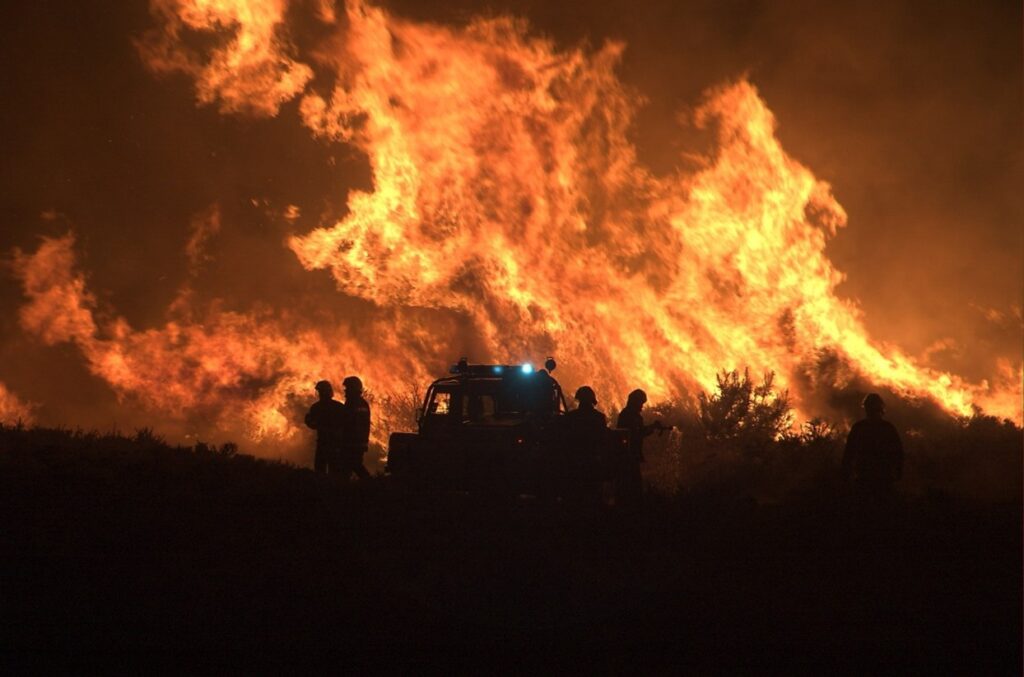
The Dorset Heaths Partnership (DHP) including Dorset Police and Dorset & Wiltshire Fire and Rescue Service work year-round on prevention and mitigation against wildfires which is largely unseen. The DHP education team delivers an extensive programme directly to 64 schools close to heathlands across Dorset. It fully explains the consequences of arson and wildfires, how they behave and the direct threat they pose to wildlife, people and property.
There are Public Spaces Protection Orders on most heathland sites across Dorset which gives land managers the power to issue fines to anyone having a campfire or BBQ on these protected sites.
Land managers across the partnership make sure that heathland access points are clear, help reduce the fuel load and create fire breaks, during a wildfire event they also provide backup for DWFRS.
DHP also runs the Firewise UK programme. This is a simple system of how people living near to sites at risk from wildfire can help protect their homes against it. It outlines how communities can work together to become more wildfire resilient. Details of this can be found at Firewise – Dorset Heaths Partnership. We also run the K9 Firewise Patrol – a team of dedicated volunteers and their dogs, who help patrol whilst out on their daily walks. More information can be found here: The Fantastic K9 Firewise Patrol – Dorset Dogs
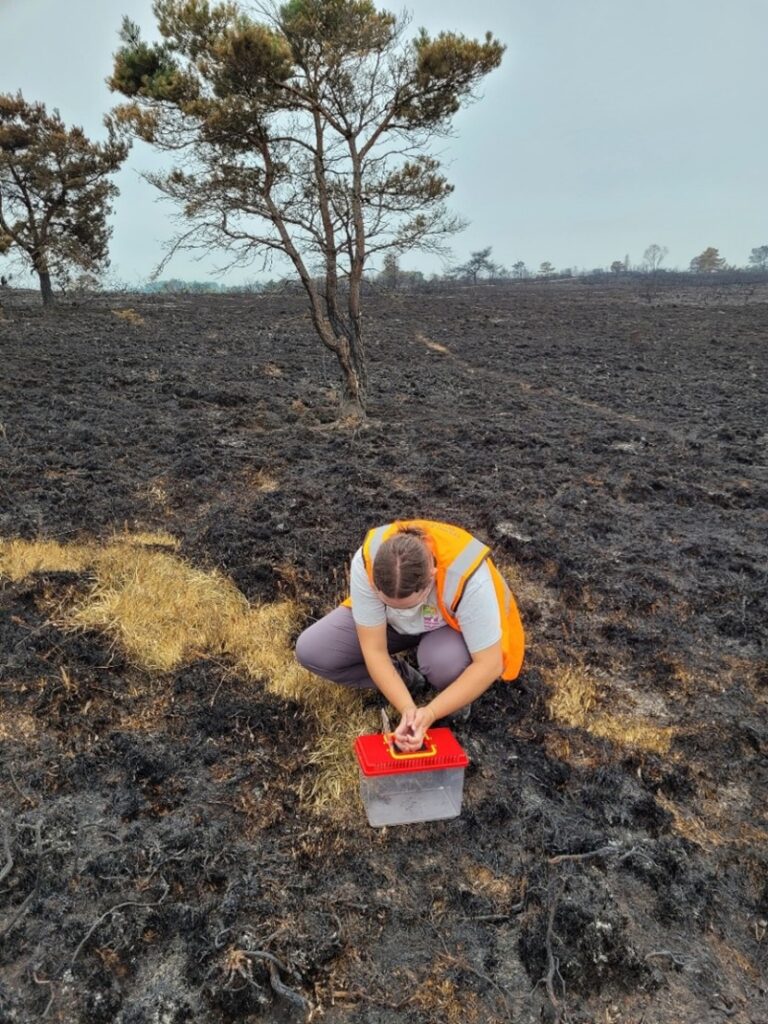
After a significant wildfire, Partnership teams carry out wildlife rescue work, moving exposed animals to safe habitat.
Paul Attwell, Team Manager at the Dorset Heaths Partnership said “There is a lot of work going on all year round when it comes to reducing wildfires on our heathland and in our forests, but one of the most important roles is played by those people who are out on these sites every day and who care deeply about them. They are the eyes and ears on the ground, and crucial in the fight against, anti-social behaviour and deliberate fire setting”
While no one was injured or homes lost in these incidents, authorities highlighted the significant risk the fires posed to the public and the considerable cost, with crews from 15 fire stations across Dorset mobilised, placing substantial pressure on emergency resources.
Area Manager, Marc House, Head of Prevention & Protection at DWFRS said “These incidents highlight just how quickly heathland fires can take hold and the devastating impact they have on our wildlife, our communities, and our emergency resources. Our crews worked tirelessly across challenging terrain to bring these fires under control, and we are incredibly grateful for the support of our partners and the public who helped us respond swiftly and safely.
We urge everyone who lives near to, visits, or cares for our heathland to stay vigilant. If you see smoke, an active fire, or any behaviour that could put these precious landscapes at risk, please report it immediately. The sooner we know, the faster we can act. Protecting Dorset’s heathlands is a shared responsibility, and together we can reduce the risk of further devastation.”
Everyone is asked to be extra vigilant over the coming days as Dorset is under an Amber wildfire weather warning until 11th April. We ask anyone witnessing any fire to get to safety, call 999 and ask for the Fire Service. Any suspicious behaviour can be reported anonymously to Crimestoppers at 0800 555 111
—–Ends—–
Notes to Editors The Amber Wildfire weather warning is issued by the Natural Hazards Partnership The Natural Hazards Partnership (NHP) – Met Office
The Dorset Heaths Partnership was formed in 2001 as The Urban Heaths Partnership. Its ten partner organisations are:
• Amphibian and Reptile Conservation Trust
• Bournemouth Christchurch & Poole Council
• Dorset Council
• Dorset & Wiltshire Fire and Rescue Service
• Dorset Police
• Dorset Wildlife Trust
• Natural England
• National Trust
• Forestry England
• Royal Society for the Protection of Birds
Its aim is to alleviate urban pressures on the Dorset heaths brought about by new residential development in the area.
This is achieved by co-ordinated Strategic Access Management and Monitoring (SAMM) delivery, this includes an education programme, heathland species and visitor monitoring, and our Dorset Dogs and Firewise projects. More information can be found Press & Media – Dorset Heaths Partnership
Lowland heathland is an important and rare habitat, and over 75% has been lost in the last 200 years. The remaining areas support an incredibly wide variety of species. This includes reptiles, migratory birds, scarce plants and over 5,000 species of insect, including the rare Ladybird Spider and the iconic Silver-studded Blue Butterfly.
Heathland supports the majority of the UK populations of Nightjars, Dartford Warblers and Woodlarks. These birds nest either on the ground or in low growing vegetation and are vulnerable to disturbance.
Heathlands are the most important habitat in the UK for reptiles, supporting all six species.